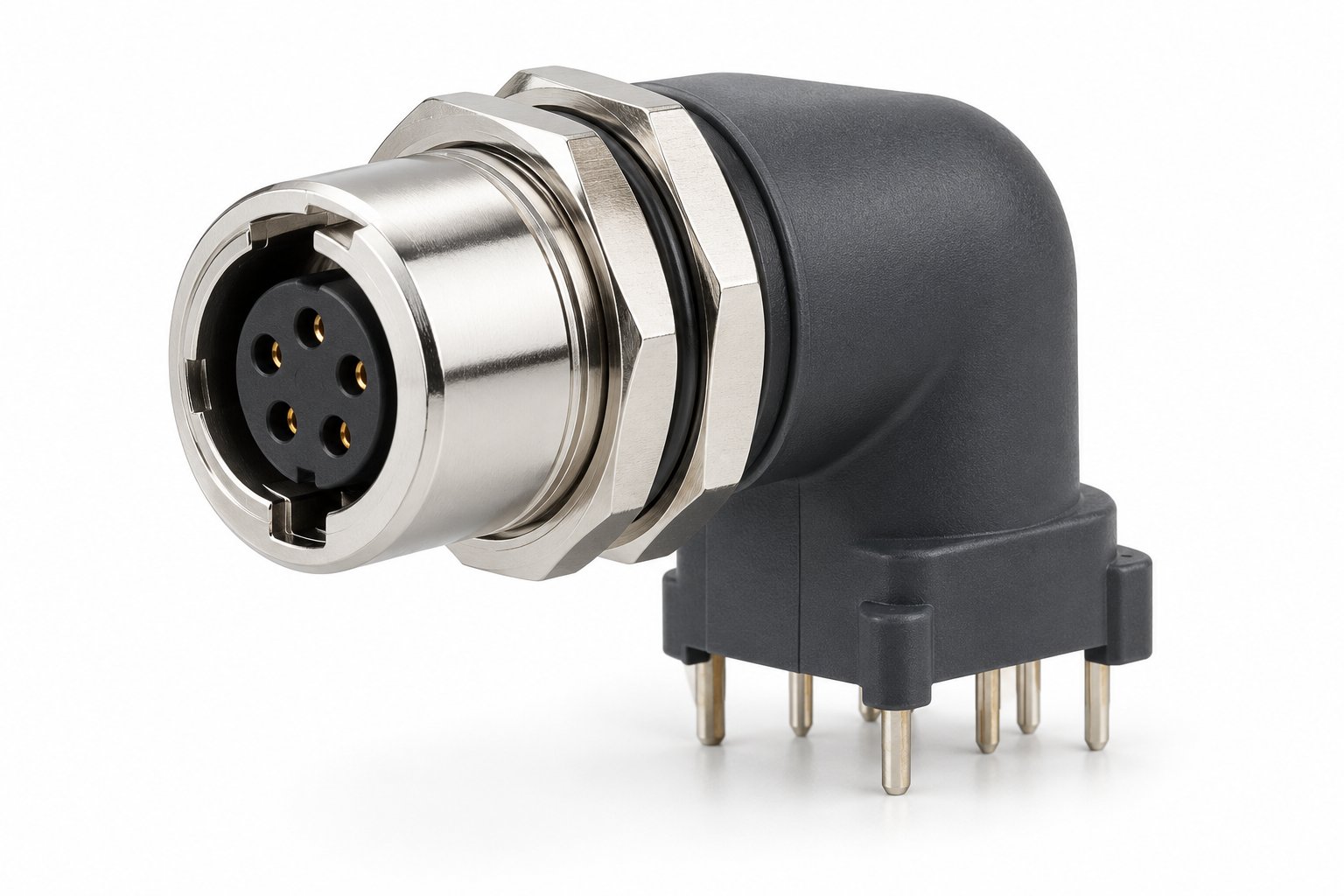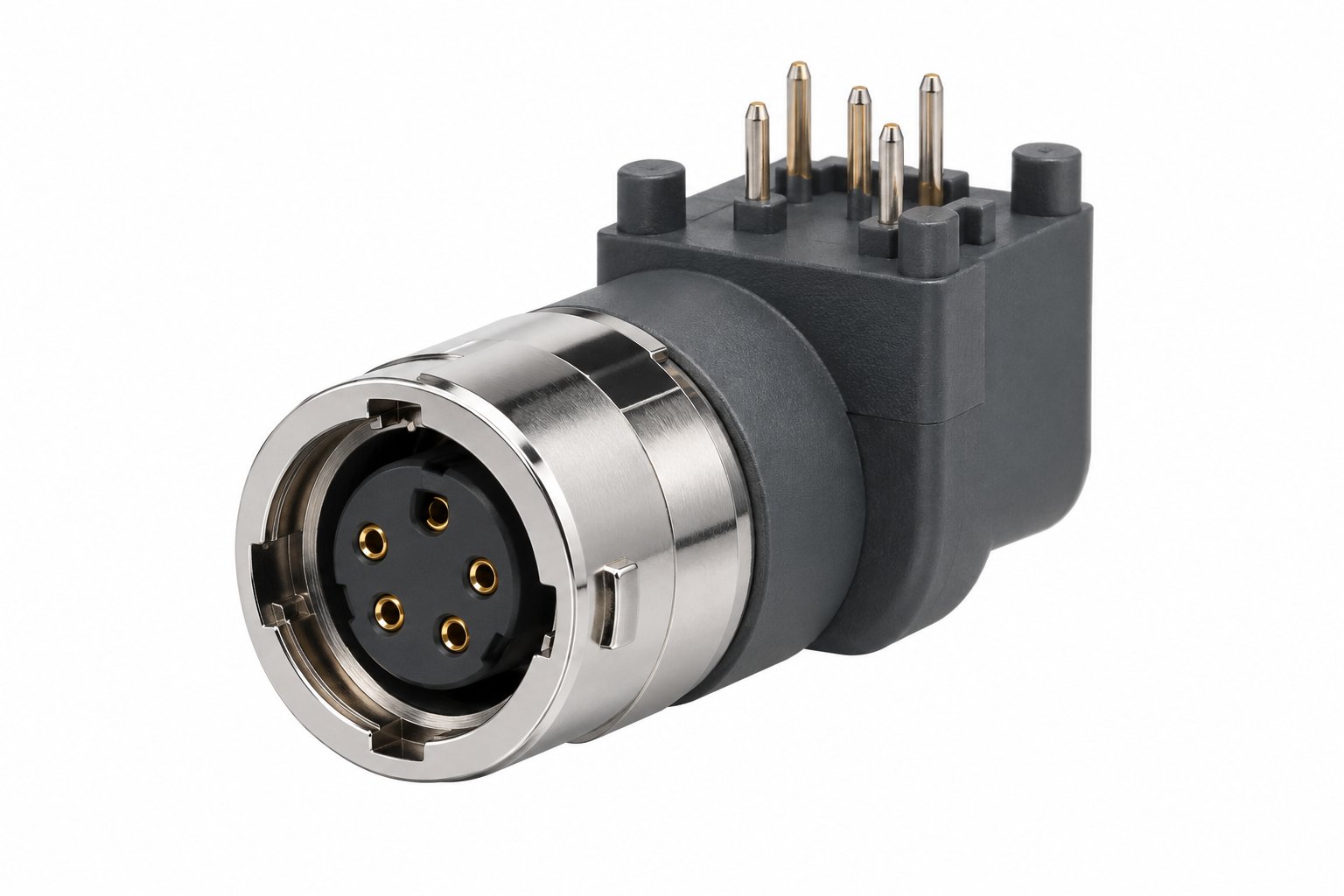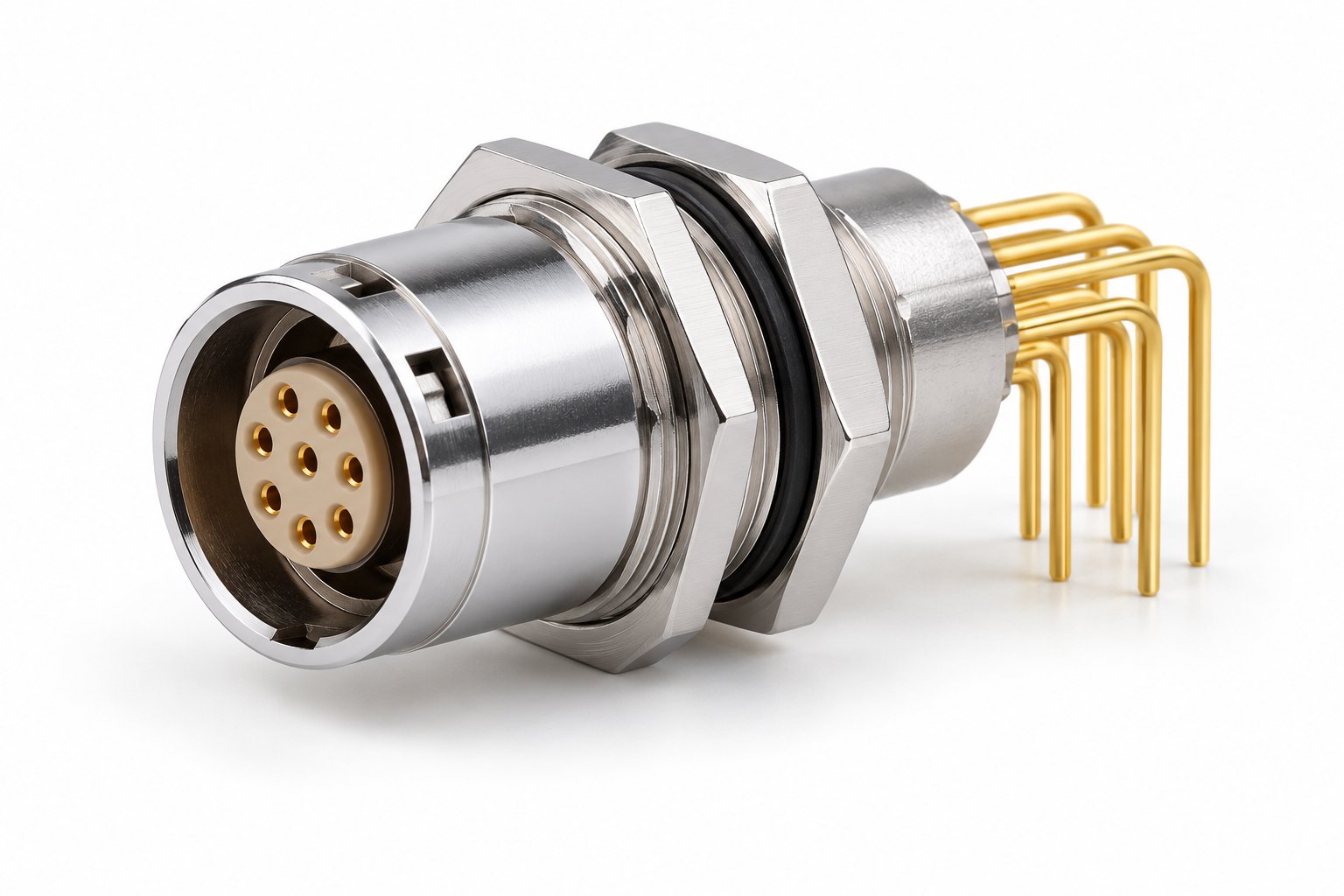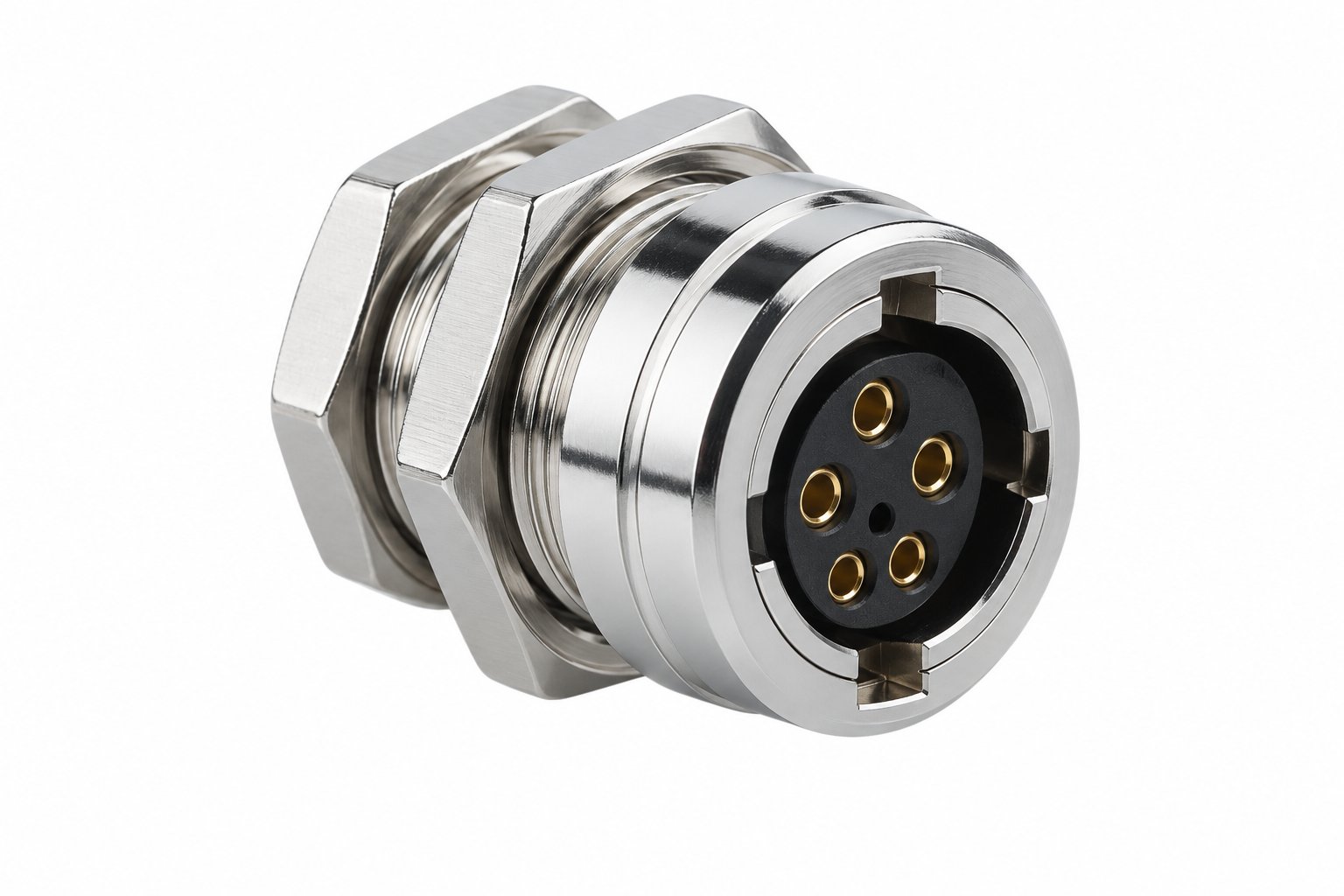
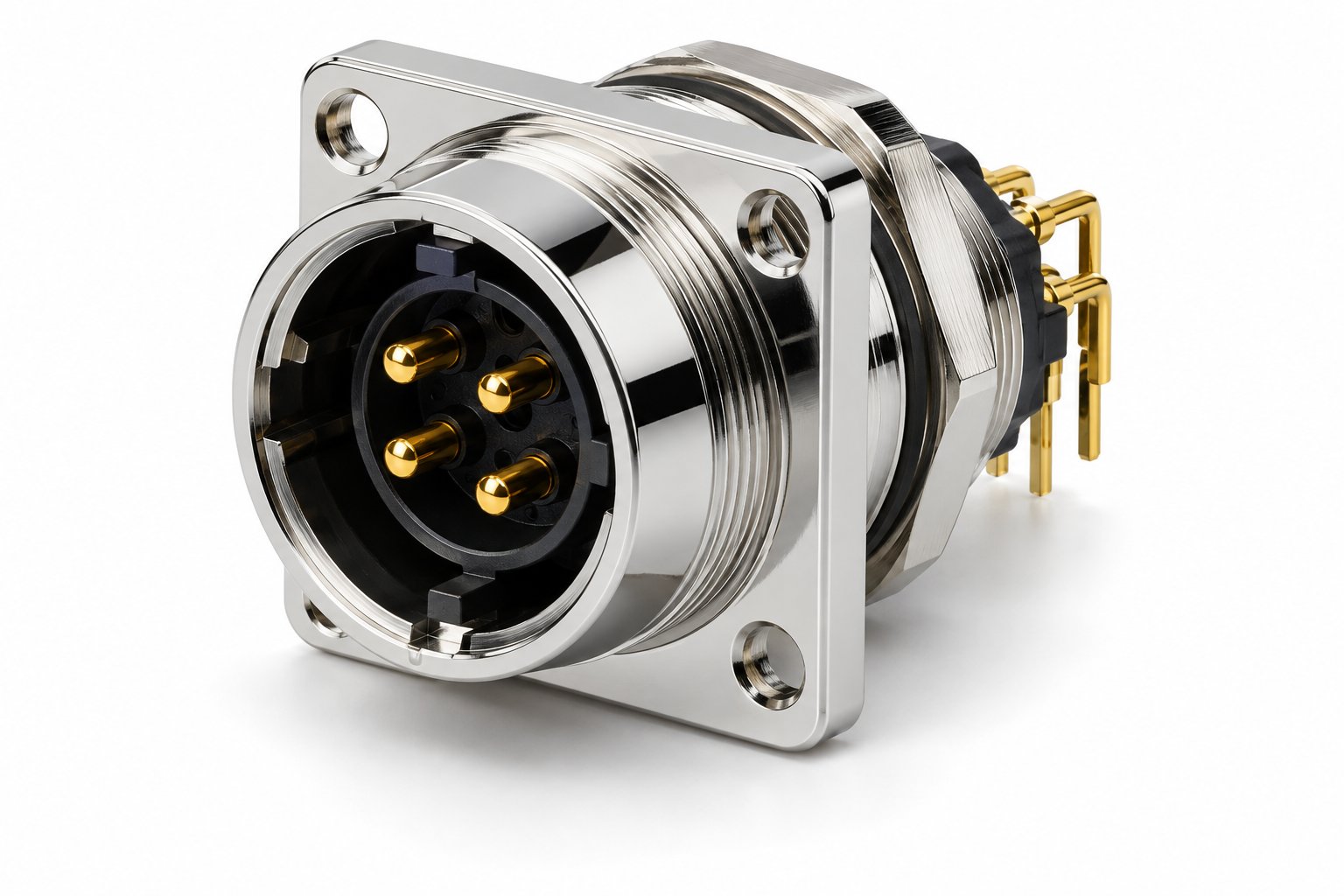
The B Series ZGG fixed socket mounts into a panel hole with the fixing nut hidden inside the housing, giving a clean front panel while keeping the push-pull mating interface. Internal (ZGG) and external fixed (ZEG) versions cover different panel designs.
Specification overview
| Pins | 2–32 |
|---|---|
| Protection | IP50 |
| Mating cycles | > 5,000 |
| Working temperature | -55 °C to +250 °C |
| Mounting | Internal / external fixed socket |
| Terminations | Solder / crimp / PCB |
| Shell sizes | 0B / 1B / 2B |
Internal or external fixing
Use the ZGG internal version when the fixing nut sits behind the panel and the front face stays flush and uncluttered; use the ZEG external version when the panel design calls for the fixing to be visible from outside. Both share the same pin range, terminations and push-pull interface, so the choice is made in the ordering code rather than the electrical design.
Wire and PCB landing options
Besides wire sockets, the B Series offers PCB solder sockets and 90° elbow PCB sockets (ZPG/ZXG) so the connector can land directly on the control board. Solder and crimp wire terminations cover harness production. State the panel thickness with your inquiry — it decides the fixing version.
Where it is used
Typical applications are instrument front panels, industrial controllers and equipment where the socket is fixed to the enclosure and the plug is mated by hand.
The cable-side counterpart is the B Series TGG push-pull straight plug; for builds where panel alignment can drift, the B Series DHG push-pull floating socket is the floating alternative.
Questions buyers ask before ordering
Internal (ZGG) or external (ZEG) fixing?
Follow the front-panel design: internal for a clean, flush face with the nut hidden inside the housing, external when the fixing must sit on the outside. Both exist in the same shell sizes.
Does it mate with the TGG plug?
Yes. The ZGG socket is the fixed panel-side counterpart of the B Series TGG push-pull plug, sharing the same shell sizes and pin counts.
What should an inquiry include?
The panel thickness, the pin count (2–32), the fixing version (internal or external), the termination style (solder, crimp or PCB), and your target quantity.
Request this socket
Tell us the panel thickness, pin count and whether you need wire or PCB termination, and we will confirm the fixed socket variant.