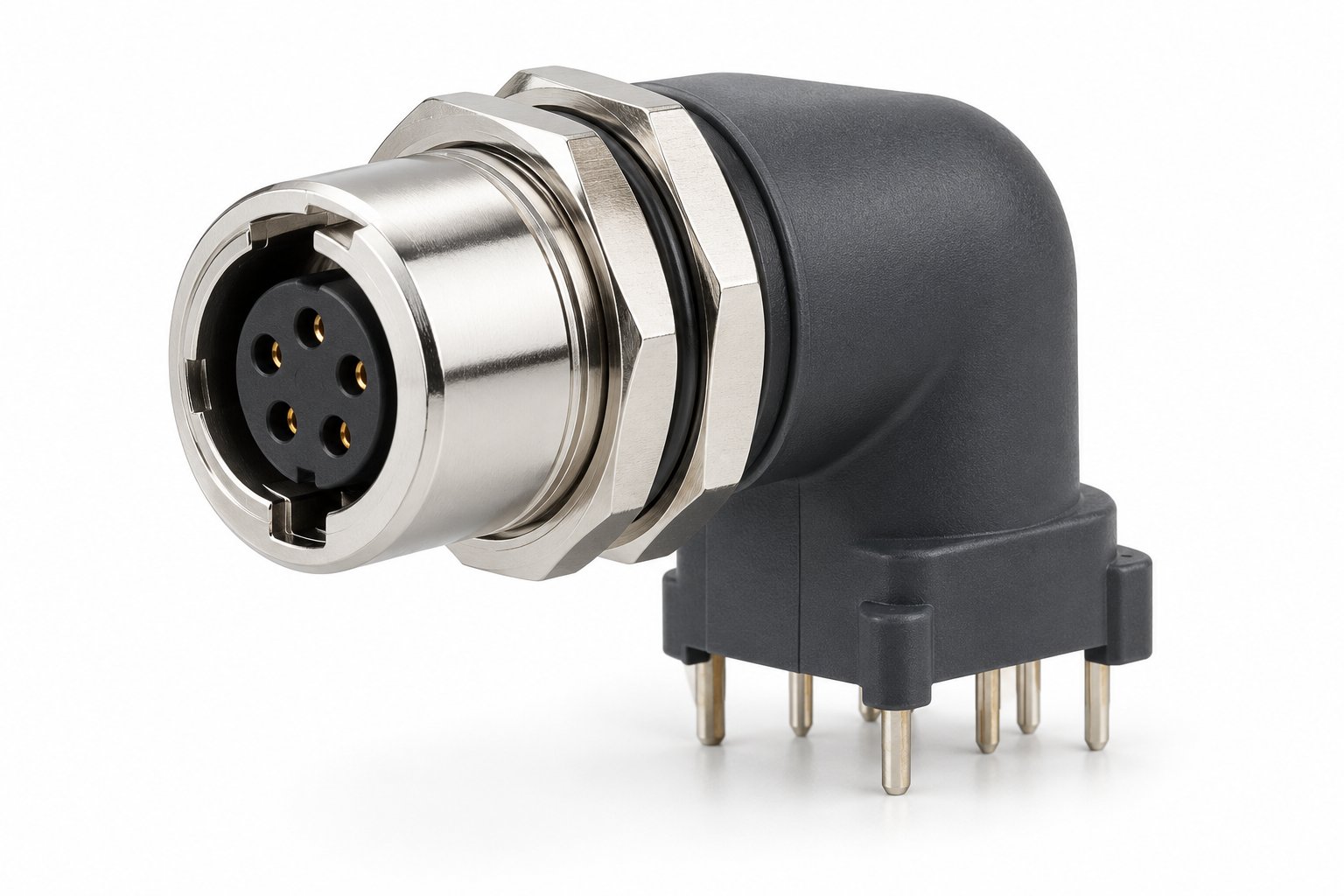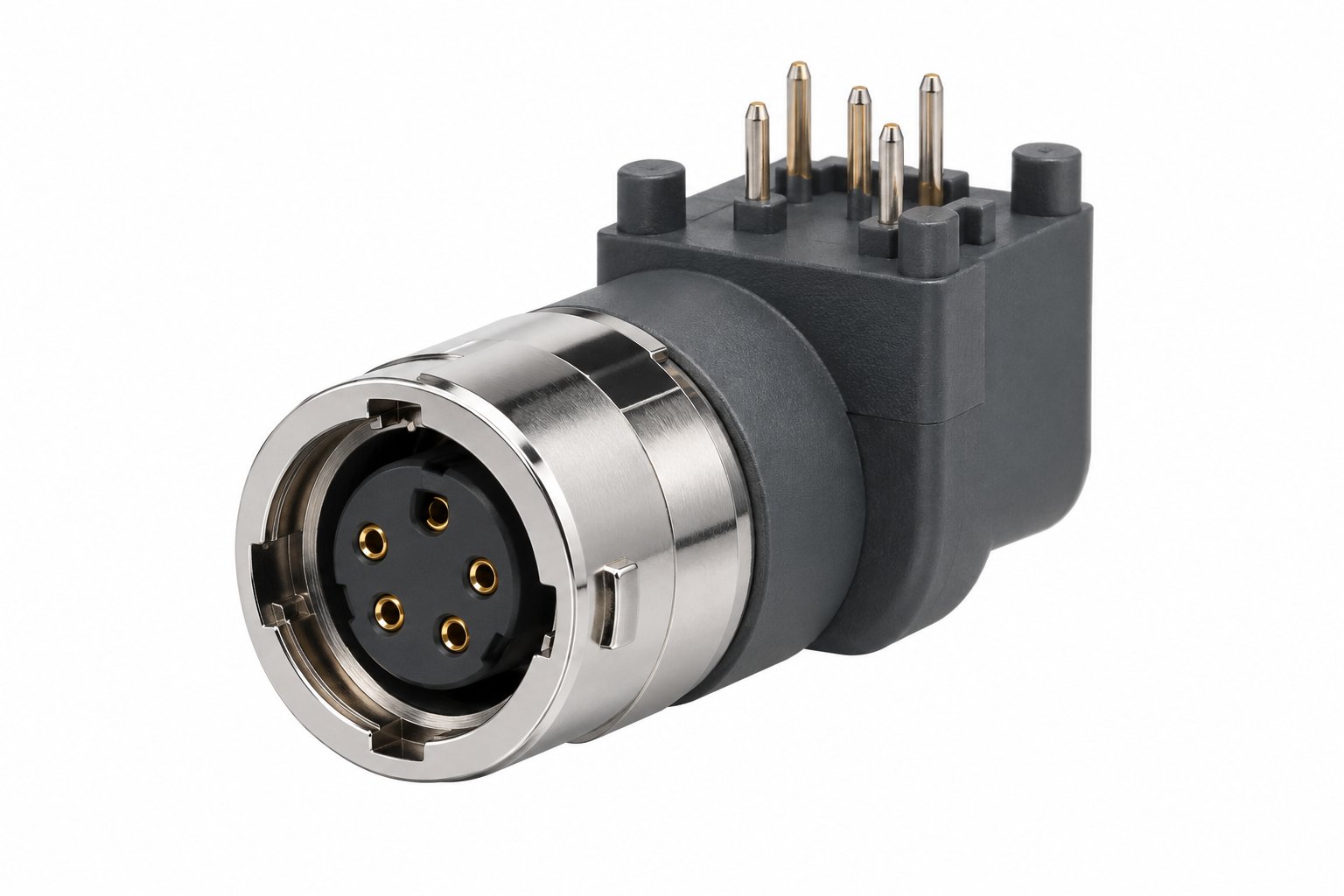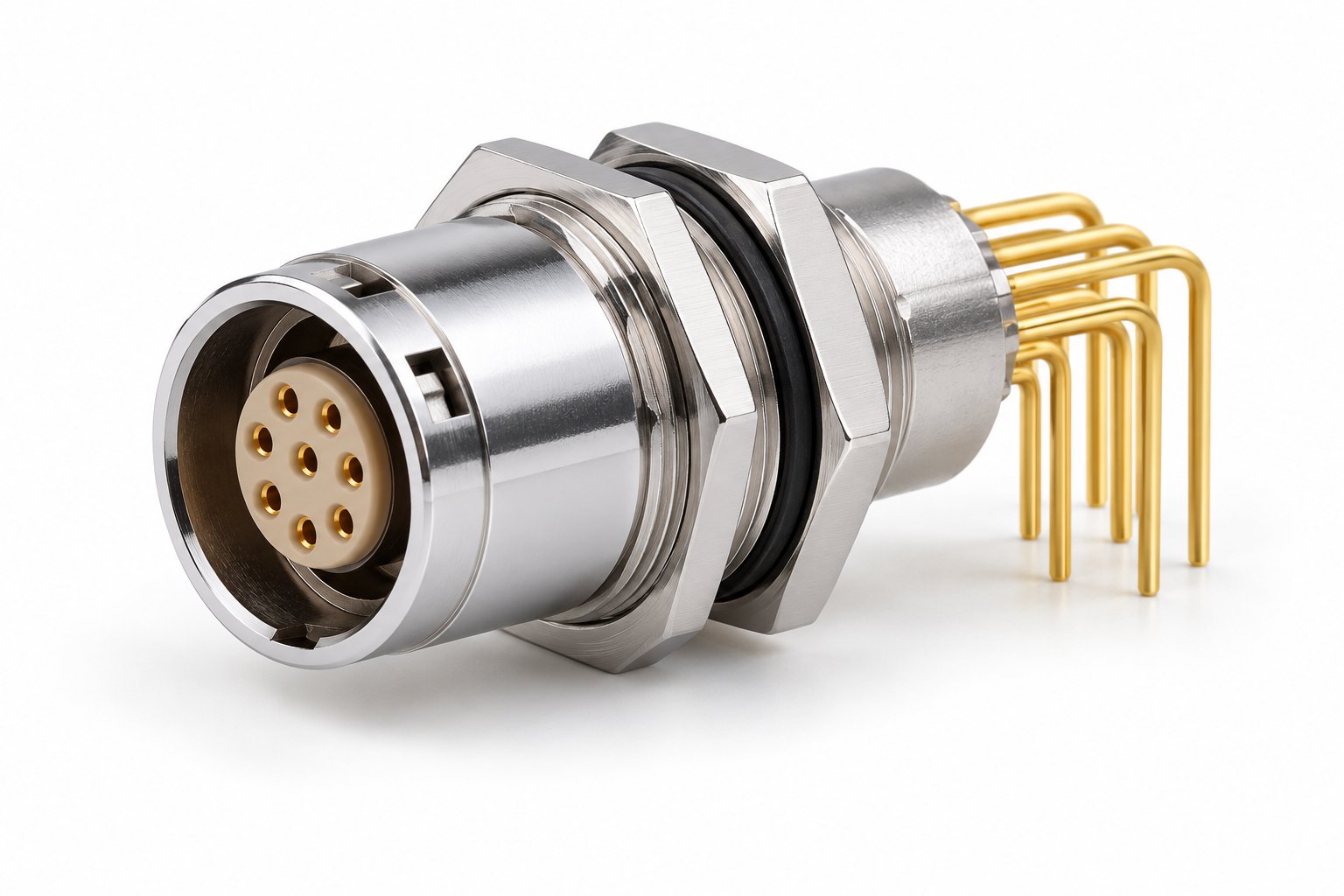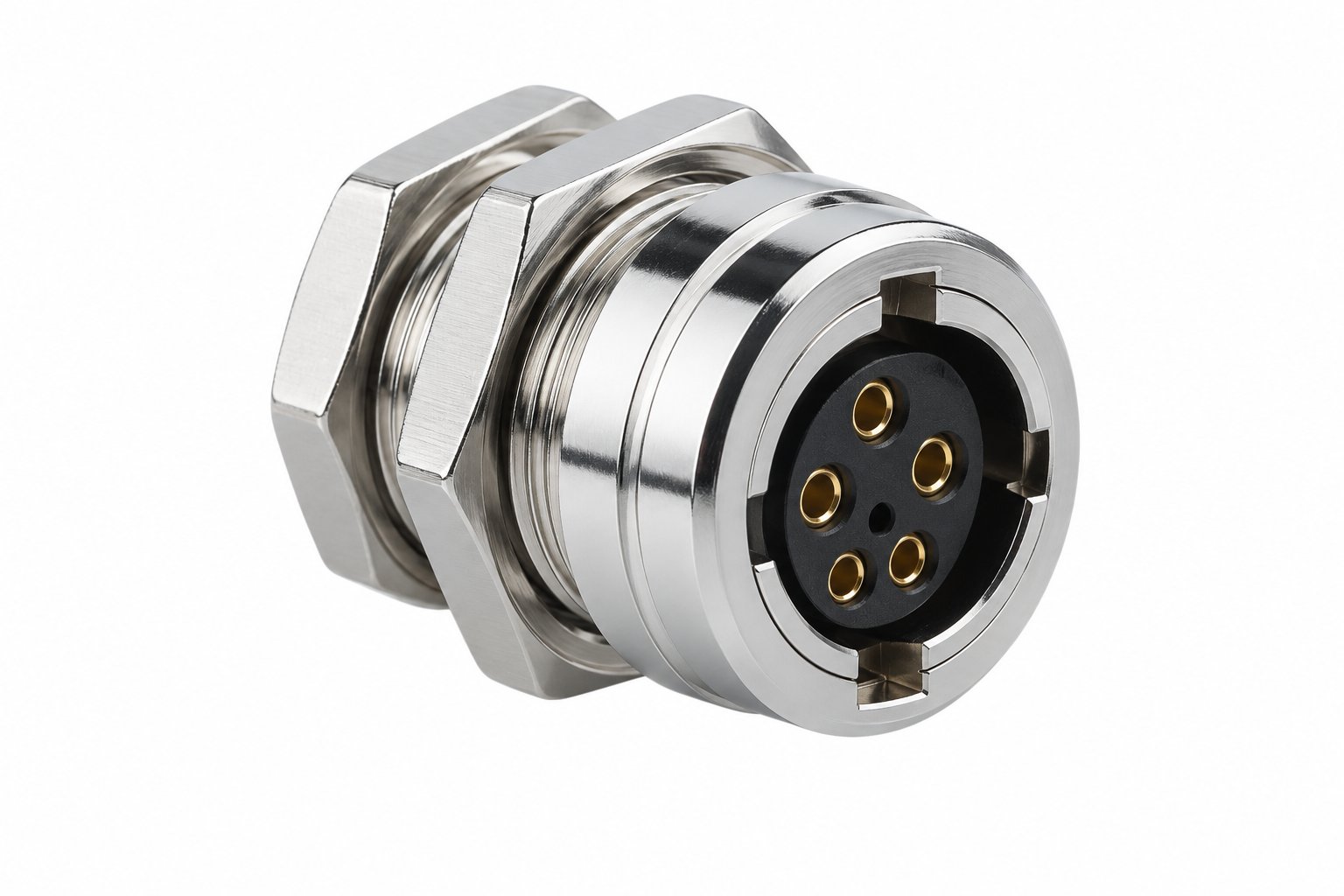
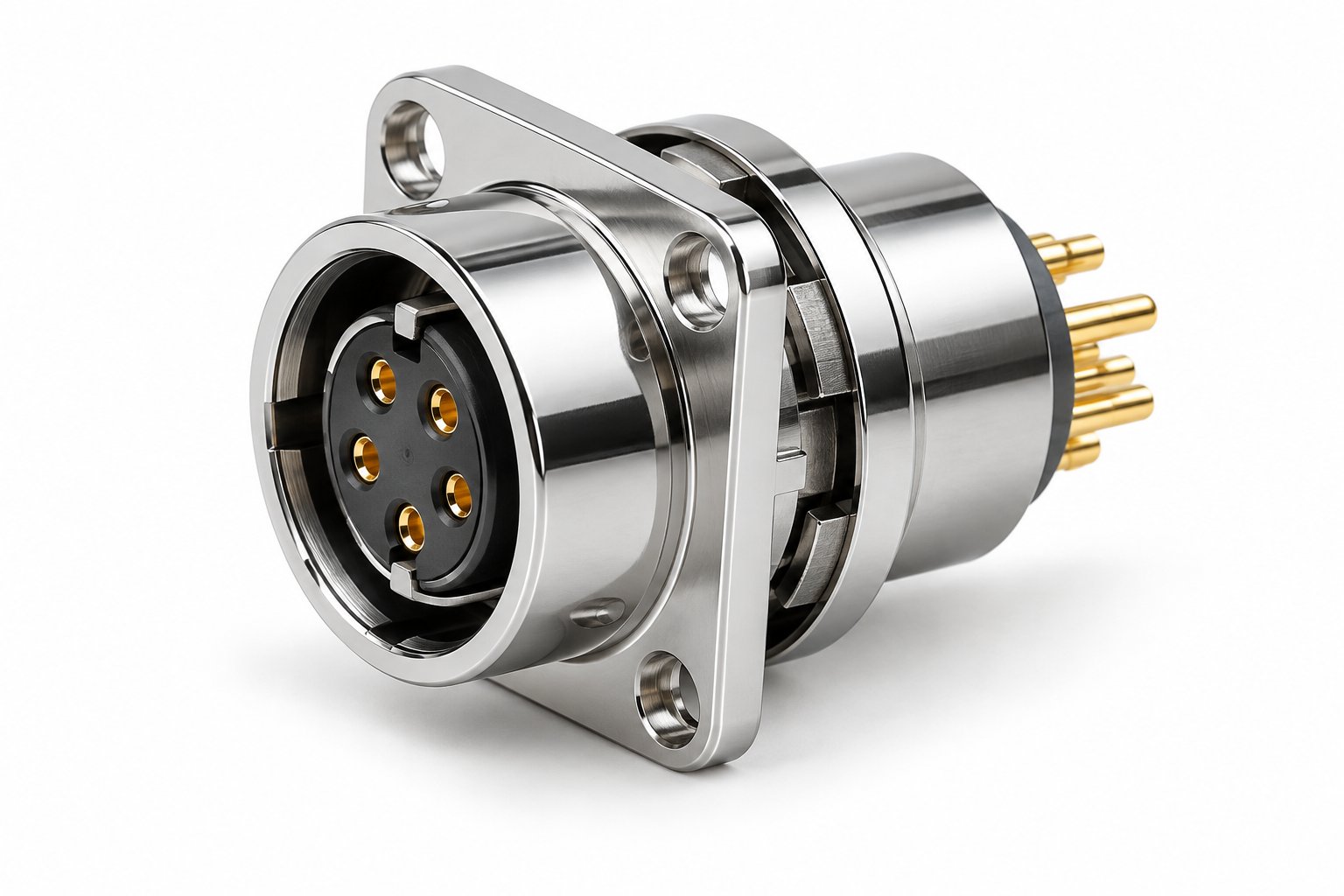
The B Series DHG floating socket absorbs small mounting misalignment between plug and panel, which simplifies assembly on cabinets, brackets and moving parts. It pairs with the B Series TGG plug and keeps the same push-pull locking behavior.
Specification overview
| Pins | 2–32 |
|---|---|
| Protection | IP50 |
| Mating cycles | > 5,000 |
| Working temperature | -55 °C to +250 °C |
| Mounting | Floating socket, nut or shrink-tube versions |
| Shell sizes | 0B / 1B / 2B |
What the floating range does in practice
On panels assembled in volume, hole positions drift and thin panels deflect; the floating range compensates both, reducing stress on solder joints during installation and service. That is the difference from the fixed sockets: the electrical interface and locking behavior are the same, only the alignment demand on your housing is lower.
Mounting versions
Two versions cover the usual builds: nut mounting for through-panel installation, and shrink-tube mounting for cable-side or enclosed assemblies. Straight and 90° assembly directions can be combined with the matching plug, so the harness can approach from either orientation.
Where it is used
Typical applications are control cabinets, industrial machines and medical devices where panels are assembled in volume and alignment tolerance is limited.
The fixed alternative is the B Series ZGG push-pull fixed socket, and the mating cable side is the B Series TGG push-pull straight plug with the same shell sizes and pin counts.
Questions buyers ask before ordering
Floating or fixed?
If your hole positions are machined and repeatable, the fixed ZGG socket is enough. If panels are assembled in volume or alignment can drift, the DHG floating version absorbs the deviation. Both belong to the same B Series family.
Nut or shrink-tube mounting?
Nut mounting suits a through-panel socket; shrink-tube mounting suits cable-side or enclosed assemblies where no panel fixing is used.
What should an inquiry include?
The pin count (2–32), the panel thickness or enclosure type, the mounting version (nut or shrink-tube), the mating plug model, and your target quantity.
Request this socket
Include the pin count, panel thickness and mating plug model so we can confirm the floating socket variant for your build.