
Key takeaways
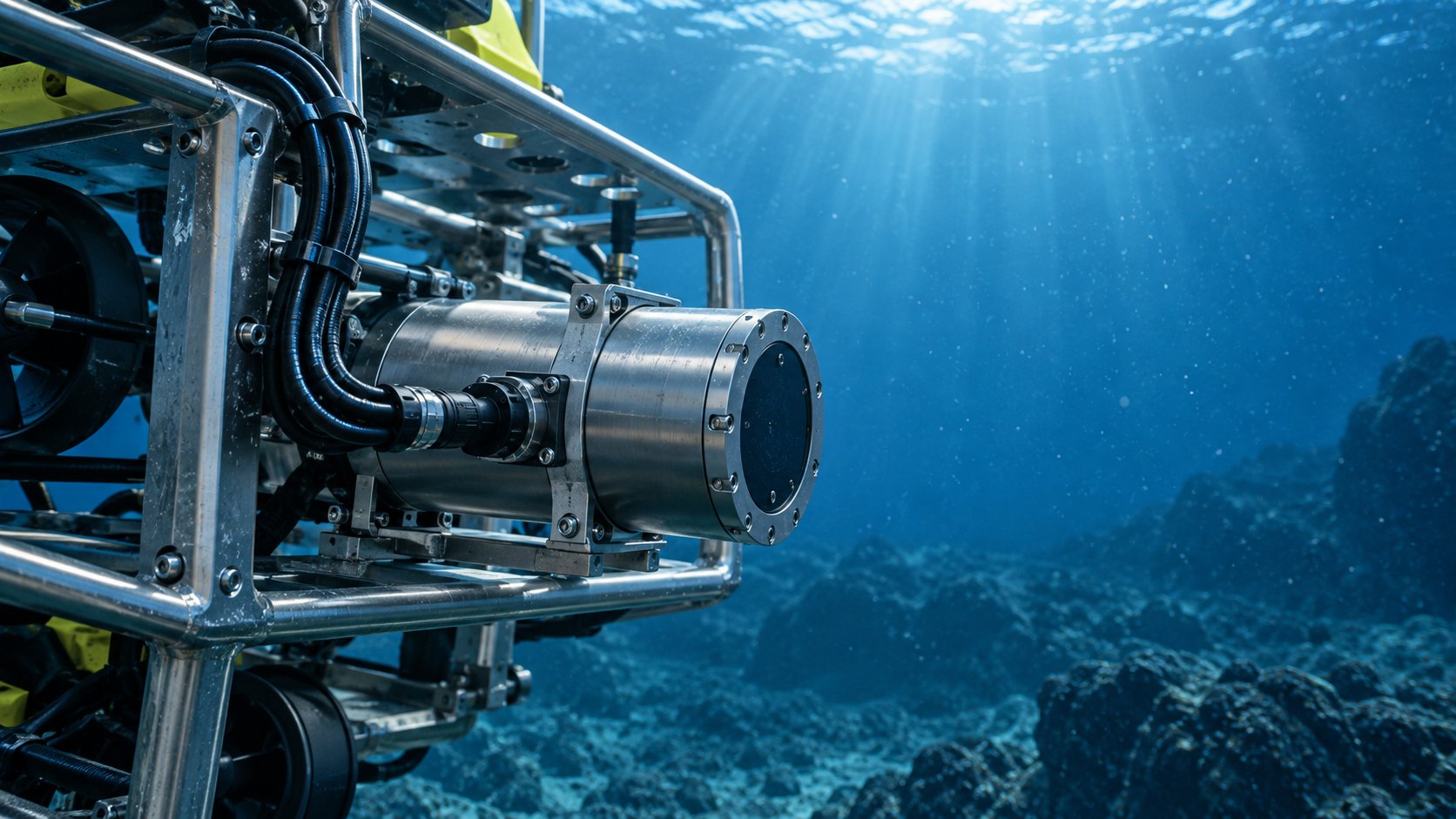
- “Underwater” covers two different duties: sustained immersion and pressure, versus splash and rain. They call for different connector sealing systems.
- An IP68 rating applies to the mated plug and socket interface. A plug from one sealing family and a socket from another may not share the same O-ring and seal geometry.
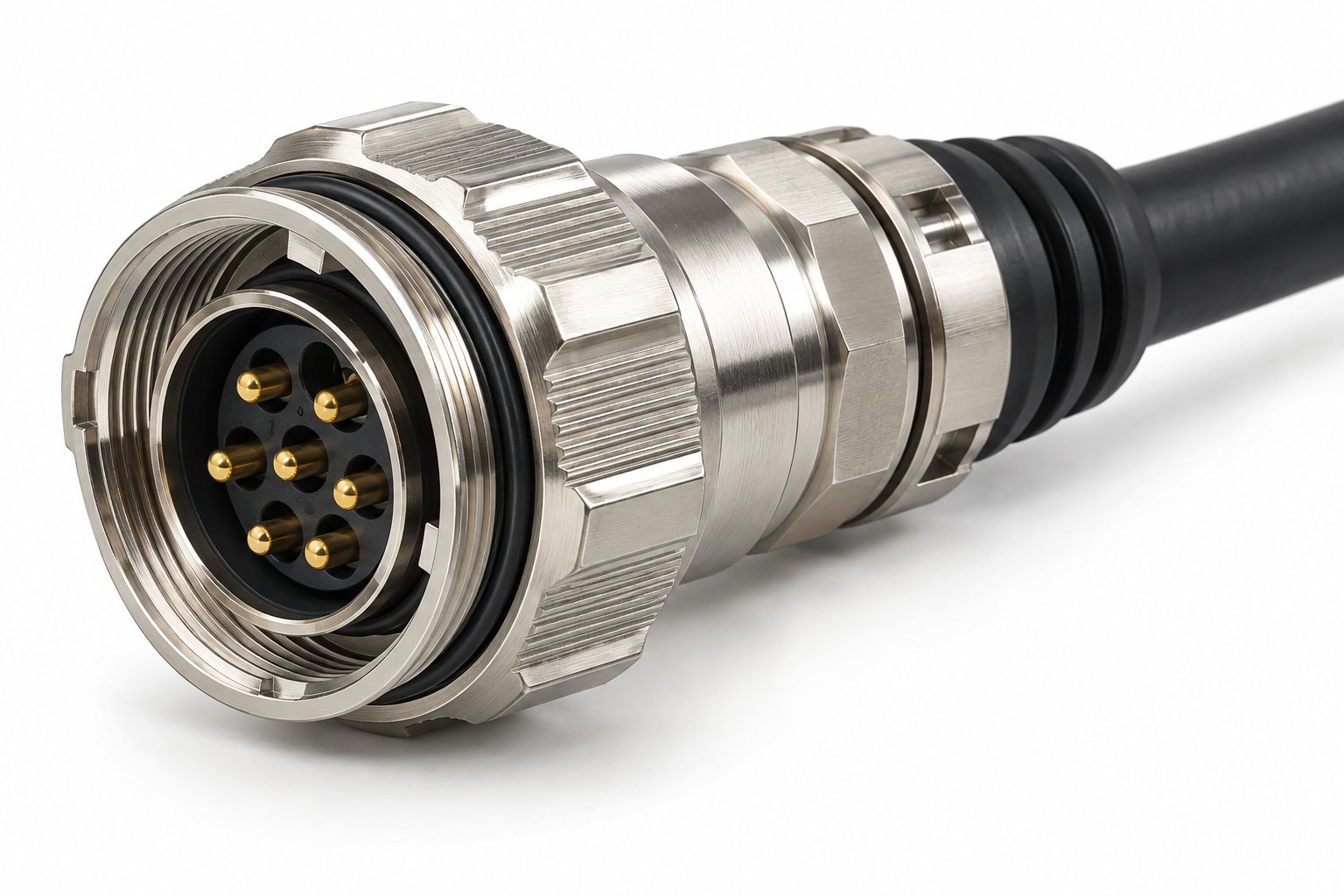
- The W Series TGG plug and ZGG socket are a matched pair: threaded nickel-plated coupling, O-ring plus triangle seal, IP68 when mated, 2–32 pins, >1,000 mating cycles, and −20 °C to +200 °C.
- Choose the socket arrangement (straight or 90-degree elbow) based on the space behind the bulkhead and how the cable will route on the ROV frame or housing.
- For splash and washdown duty where no immersion occurs, the K Series offers more mating cycles and a wider temperature range.
What underwater electrical connectors actually have to survive
The word “underwater” gets used loosely in equipment procurement. A connector behind a washdown nozzle on a fish-processing line, a connector on a dockside control cabinet exposed to rain, and a connector on an ROV subsea sensor housing are not the same requirement. Before comparing product families, define the environment class your equipment will actually see. The spec sheet you write from that definition will be more accurate, and the supplier’s confirmation will be faster, because both sides are working from the same condition.
The three common conditions are:
- Sustained immersion and pressure. The connector sits in water for the duration of the mission, and the water column above it applies pressure at the mated interface. This is where the W Series is intended to operate — subsea sensors, underwater lighting, ROV interfaces and housings exposed to sustained water pressure.
- Splash and rain. The connector is exposed to jets, spray or weather but is not submerged during operation. The K Series covers this class with IP66–IP68 and is commonly used on outdoor machinery, drives and control systems exposed to splash, dust and interference.
- Occasional washdown. A middle case: the joint may be hit by a hose during cleaning but dries out afterwards.
The distinction is not academic. IP68 rated connectors are specified for immersion, but the test condition and the actual mated geometry both matter. A connector that is only IP68 when mated should never be relied on for protection while unmated. The next two sections deal with that in detail.
The mated condition: why IP68 is a paired-interface property
An IP rating describes a complete enclosure under a defined test. For a connector, the enclosure is the mated plug-and-socket assembly. The plug alone, or the socket alone, is an open interface. This is why suppliers write “IP68 (mated)” rather than “IP68” without qualification. The rating holds while the two halves are engaged and the seals are compressed; it does not describe the plug dangling on its cable during installation or maintenance.
The practical consequence for underwater electrical connectors is that the two halves should come from the same sealing system. The W Series TGG plug and the W Series ZGG socket share one sealing concept: a threaded nickel-plated coupling, an O-ring, and a triangle seal. That shared geometry is what allows the pair to be rated IP68 when mated. If you pair a W Series plug with a socket from a different family, the mechanical thread may engage, but the O-ring and triangle seal were not designed against that mating face. The result is an assembly whose mated protection is unverified.
This is also why the question “can I order the plug now and the socket later?” deserves a careful answer. You can, but the socket should be specified from the same series, and the supplier should confirm the complete mated part number pairing before shipment. Buying one half and sourcing the other elsewhere shifts the sealing responsibility onto your assembly floor.
For a list of equipment types where this pairing pattern is used, see the underwater and marine equipment applications page.
Choosing the equipment-side interface: straight or 90-degree elbow socket
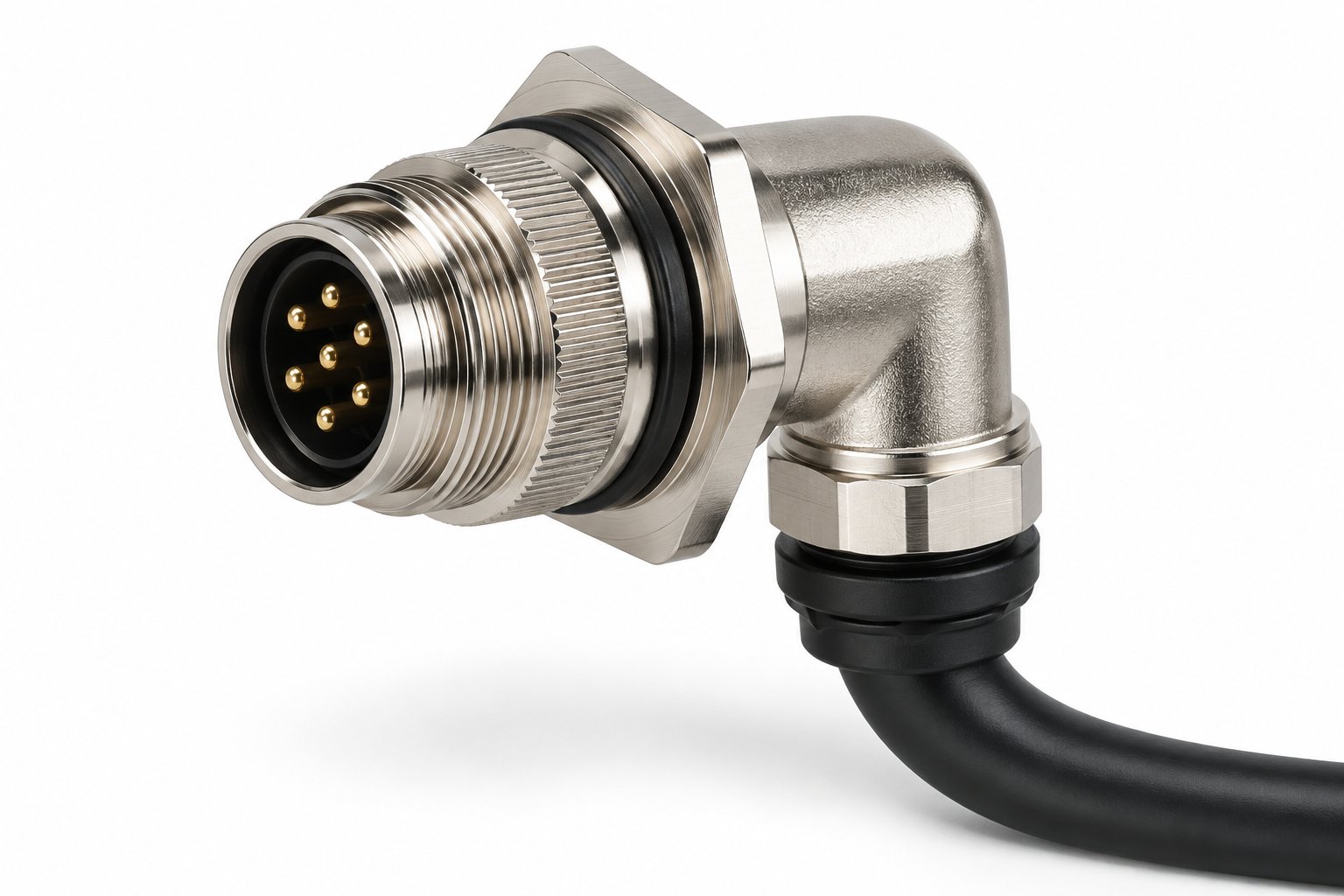
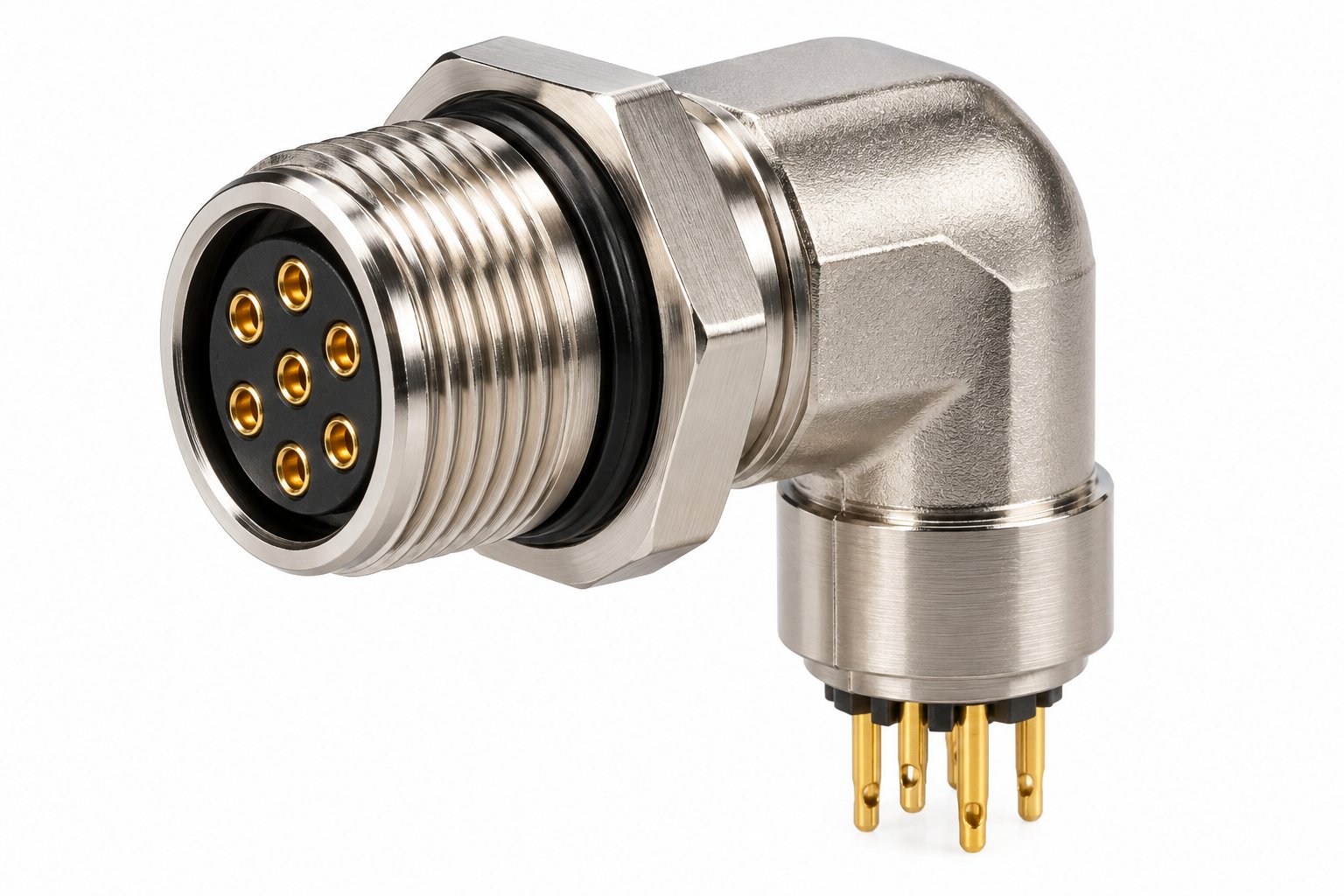
Once you have settled on the W Series pair, the next decision is the socket arrangement on the equipment side. The W Series ZGG fixed socket is offered in straight and 90-degree elbow arrangements. Both are IP68 when mated with the matching TGG plug, both cover 2–32 pins, both use shell sizes 0W through 4W, and both pair with the W Series TGG straight plug.
The choice is mostly about packaging. A straight socket projects along its mounting axis; the cable then leaves the housing in line with the connector. A 90-degree elbow socket turns the cable path immediately, which helps when there is limited depth behind the bulkhead or when the cable must run along the housing surface rather than away from it. On ROV frames and compact subsea sensor housings, that routing difference often decides which arrangement is buildable.
Two points worth checking before you commit to an arrangement:
- Clearance for the cable bend. The elbow occupies less axial space but more lateral space. Confirm the minimum bend radius of your cable against the space inside the housing.
- Service access. A straight socket may be easier to mate and unmate by hand in a crowded frame; an elbow may be easier to route but harder to reach. If the connector will be unmated during maintenance, consider both.
The W Series ZGG fixed socket product page covers the straight version, and the ZGG elbow socket page covers the right-angle variant including its PCB termination option.
Contacts, termination and signal integrity
The W Series covers 2–32 pins across shell sizes 0W, 1W, 2W, 3W and 4W. That range covers most subsea sensor, lighting and ROV interface harnesses, but the pin count should be chosen from the actual signal and power list, not from what happens to be in stock. Include spare conductors where the harness may grow.
Termination options differ by product. The W Series TGG plug uses solder-wire terminations with solder-type male and female contacts. The W Series ZGG socket is also available with solder-wire termination, and the ZGG elbow variant is offered with solder-wire or PCB termination. PCB termination is useful when the socket mounts directly to a board inside the housing, removing a wire run and a potential failure point. The ZGG elbow socket’s PCB variant is listed against IEC 61076-2-010; that reference applies to that variant record, not to the whole W Series range.
Shielding is a separate specification. The W Series TGG plug is rated at >95 dB at 10 MHz and >80 dB at 1 GHz. Those figures matter when the cable carries low-level analog sensor signals, sonar returns or camera data near motors and switching electronics. For a simple power feed to an underwater light, shielding may be less critical; for a sensor harness running alongside a thruster cable, it often is. These figures are connector record values; the shielding of the finished harness also depends on the cable and the termination, so evaluate the complete assembly when interference is a concern.
If your signal list includes both power and low-level signals, say so in the inquiry. The pin assignment and shielding approach can then be confirmed against the arrangement you need rather than assumed after the order.
Temperature range and mating life: what the numbers imply
The W Series is rated −20 °C to +200 °C and >1,000 mating cycles. The K Series, which covers the splash and washdown class, is rated −55 °C to +250 °C and >5,000 mating cycles. These are different design targets, and the difference has a practical meaning for maintenance planning.
A subsea connector that is mated once at build and unmated only during annual service will rarely approach 1,000 cycles. A connector on a test fixture or a frequently reconfigured ROV payload may see far more mate-unmate events, and there the K Series’ >5,000 cycle figure is relevant — provided the environment is splash or washdown rather than sustained immersion. The temperature range also matters: the W Series upper limit of +200 °C is well above most seawater conditions, but it is worth checking against any local heat source such as a lamp housing or a power dissipating module.
The broader TRCONN range includes latch systems rated for more than 5,000 mating cycles in the appropriate series. The W Series figure of >1,000 cycles should be read as the specification for that underwater family, not as a limitation of push-pull connectors in general.
Comparison table: W, K and F series at a glance
The table below uses only published specifications for the three families discussed in this article. It is a starting point for matching a series to a duty class, not a substitute for confirming the mated part number with the supplier.
| Attribute | W Series TGG / ZGG | K Series TGG | F Series ZLG |
|---|---|---|---|
| Intended duty | Sustained immersion and pressure (underwater instruments, subsea lighting, ROV equipment) | Splash, rain, washdown, dust (outdoor machinery, drives, control systems) | Thin-sheet or plastic housings needing an external-thread, front-sealed socket |
| IP rating | IP68 (mated) | IP66–IP68 | IP68 mated |
| Pin / contact count | 2–32 pins | 2–30 pins | 2–12 contacts |
| Shell sizes | 0W, 1W, 2W, 3W, 4W | 0K, 1K, 2K, 3K, 4K | 0F, 1F |
| Mating cycles | >1,000 | >5,000 | >5,000 |
| Working temperature | −20 °C to +200 °C | −55 °C to +250 °C | −55 °C to +250 °C |
| Shielding | >95 dB at 10 MHz; >80 dB at 1 GHz | >95 dB at 10 MHz; >80 dB at 1 GHz | Not listed in source data |
| Termination | Solder-wire (TGG and ZGG); solder-wire or PCB on ZGG elbow | Solder, crimp or PCB | Solder-wire or PCB |
| Locking | Threaded coupling | Threaded or push-pull | External thread with front O-ring |
Table values come from the published TRCONN product records for each series. Mated IP68 protection assumes the matching plug from the same sealing system; the complete mated part number is confirmed with the supplier before quoting.
When the W Series is not the right answer
Two cases sit outside the W Series’ intended use, and it is better to identify them early than to over-specify an immersion connector for a splash job.
Splash-zone duty: K Series
If the connector is never submerged but sees rain, hose washdown or dust, the K Series TGG rigid waterproof straight plug is the more direct fit. It carries IP66–IP68, covers 2–30 pins across shell sizes 0K–4K, and offers solder, crimp or PCB termination with threaded or push-pull locking. Its >5,000 mating cycle rating and −55 °C to +250 °C range are useful where the connector is unmated often or the enclosure runs hot. The K Series is specified for outdoor machinery, drives and control systems exposed to splash, dust and interference. For occasional washdown where the joint is never submerged, the K Series is normally the starting point; if the joint can be submerged even briefly, treat the duty as immersion and have the W Series pair confirmed instead. See the K Series TGG straight plug page for details.
Thin-sheet or plastic housings: F Series ZLG
When the equipment housing is thin sheet metal or plastic and there is no room for an internal-thread socket, an externally threaded, front-sealed socket can be the cleaner mounting. The F Series ZLG outer sealed fixed socket uses an external thread with a front O-ring, is rated IP68 when mated with the matching F Series plug — an unmated socket on its own does not provide that protection — covers 0F and 1F shell sizes with 2–12 contacts, and offers solder-wire or PCB termination. It is rated >5,000 mating cycles and −55 °C to +250 °C. It is a smaller-contact-count family than the W Series, so check the pin count against your harness. The F Series ZLG socket page lists the full record.
If your application sits between these classes — for example, an underwater housing that is periodically opened on deck — describe both conditions in the inquiry. The supplier can then confirm whether the W Series mated pair is appropriate or whether the duty is closer to the K Series.
An inquiry checklist for underwater and subsea connector projects
Most delays in quoting an underwater connector come from missing conditions, not from missing part numbers. The supplier needs to confirm the mated configuration against your actual environment. The following list covers what to send.
- Depth condition. State the depth or pressure condition the equipment will operate in: whether immersion is continuous or intermittent, the depth band, and the mission duration — for example, “continuous immersion at a stated depth for multi-hour missions”. TRCONN confirms the configuration against that condition before quoting. Do not assume a series is suitable from the name alone.
- Duty type. Sustained immersion, splash and washdown, or occasional. This decides whether the W, K or F family is the starting point.
- Pin count. List the signals and power conductors, and note any spares. The W Series covers 2–32 pins, so the count should come from the harness.
- Cable diameter and type. The cable outside diameter and jacket material affect the backshell and strain relief. If the cable is shielded, say so.
- Termination. Solder-wire or PCB. For the ZGG elbow, PCB termination is available; for the TGG plug, solder-wire is the listed option.
- Socket arrangement. Straight or 90-degree elbow, with a sketch of the space behind the bulkhead if possible.
- Mating cycles expected. Roughly how often the connector will be mated and unmated over its service life.
- Temperature. Ambient water temperature and any local heat source near the connector.
- Quantity. Prototype, pilot build or production volume, so the quotation and lead time can be matched to the stage.
With those inputs, the supplier can confirm the mated part number, the sealing series and the termination before a quote is issued. For the W Series, that means confirming a TGG plug against a ZGG socket from the same sealing system, in the shell size and pin count your harness needs.
FAQ
Can a push-pull connector be used underwater?
Yes, when the connector is designed for it and the mated pair is rated for immersion. The W Series TGG plug and ZGG socket are IP68 when mated and are intended for underwater instruments, subsea lighting and housings exposed to sustained water pressure. The rating applies to the mated interface, so the plug and socket should come from the same sealing family.
Do I have to order plug and socket together?
Not necessarily in one order, but both halves should be specified from the same series so the O-ring and triangle seal geometry match. If you source one half now and the other later, confirm the mated part number pairing with the supplier before the second half is built.
What information does the supplier need to confirm a W Series configuration?
The depth condition, duty type, pin count, cable outside diameter, termination preference (solder-wire or PCB where applicable), socket arrangement (straight or elbow), expected mating cycles, temperature and quantity. The depth condition is the one most often omitted and the one that most affects confirmation.
IP68 vs “waterproof” marketing claims
IP68 is a defined rating with a test condition. “Waterproof” has no standard definition and can mean anything from rain-resistant to submersible. When a datasheet says only “waterproof,” ask for the IP rating and whether it applies when mated. For underwater work, the mated condition and the sealing system matter more than the word on the brochure.
Send your project conditions for confirmation
Founded in 2014, TRCONN specializes in push-pull self-locking connectors, operates an in-house inspection and test laboratory, and offers a range spanning 2–32 pins and IP50 to IP68. For an underwater project, the fastest route to a usable quote is to send the depth condition, pin count, cable diameter and target quantity. The configuration is confirmed against those inputs before quoting.