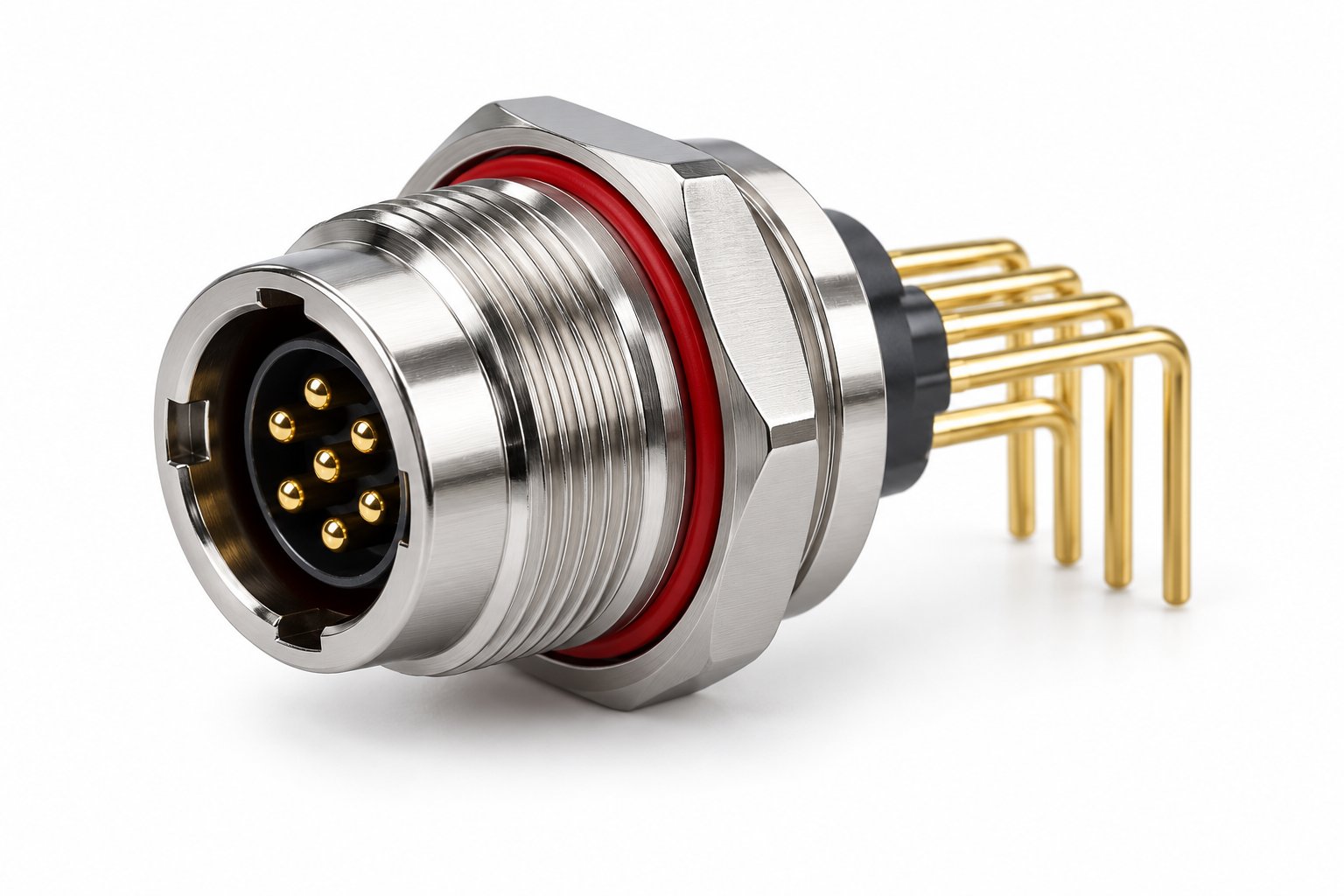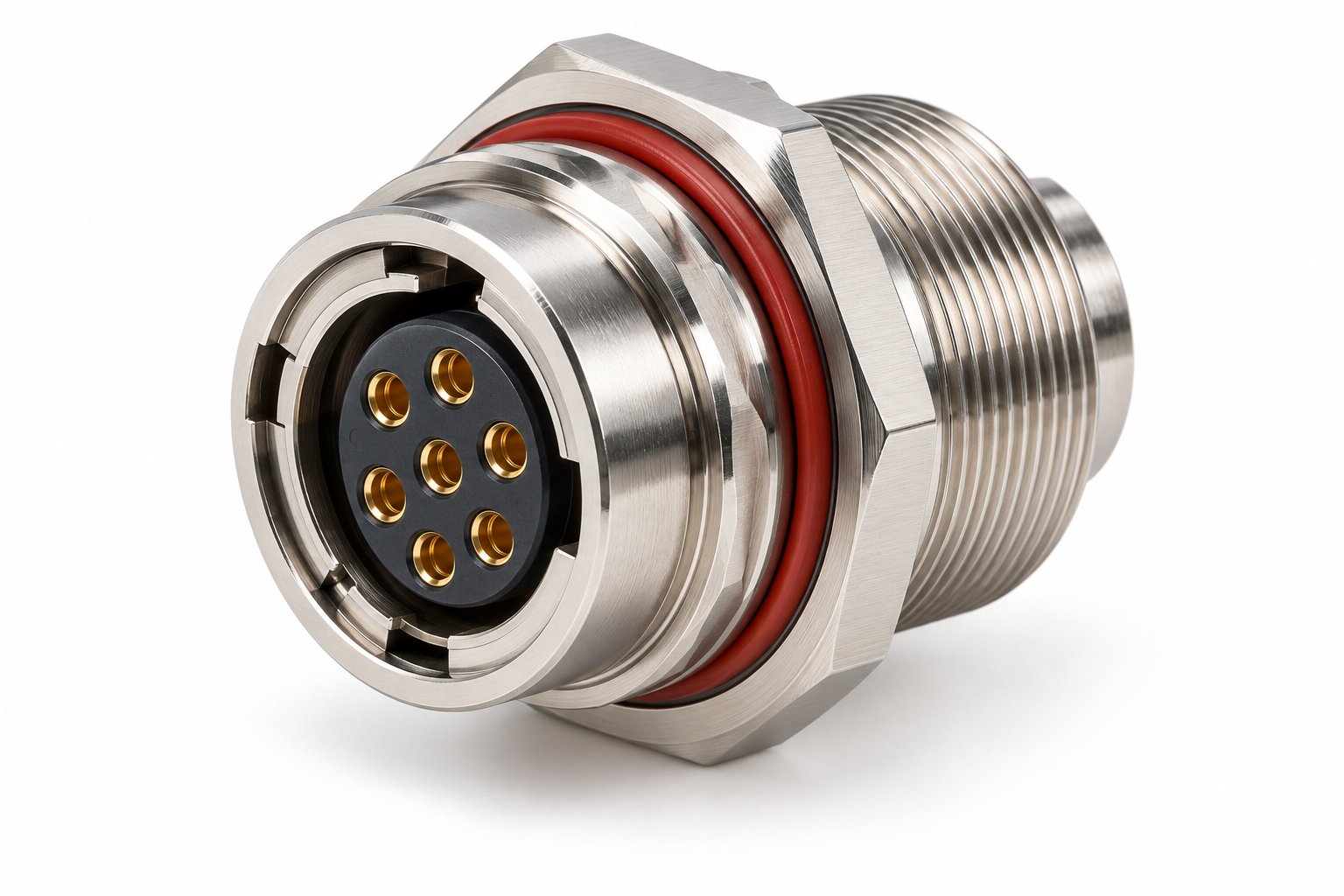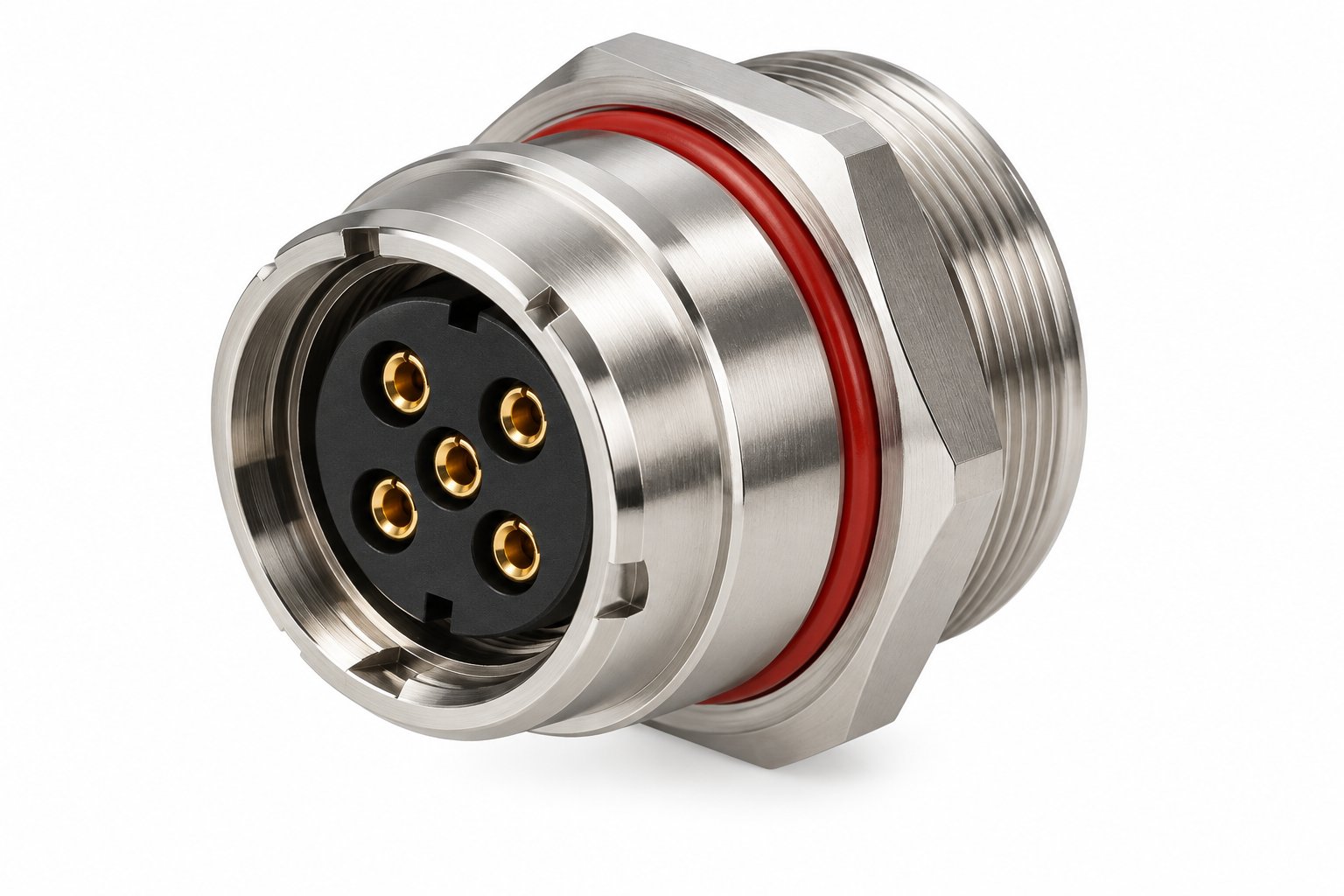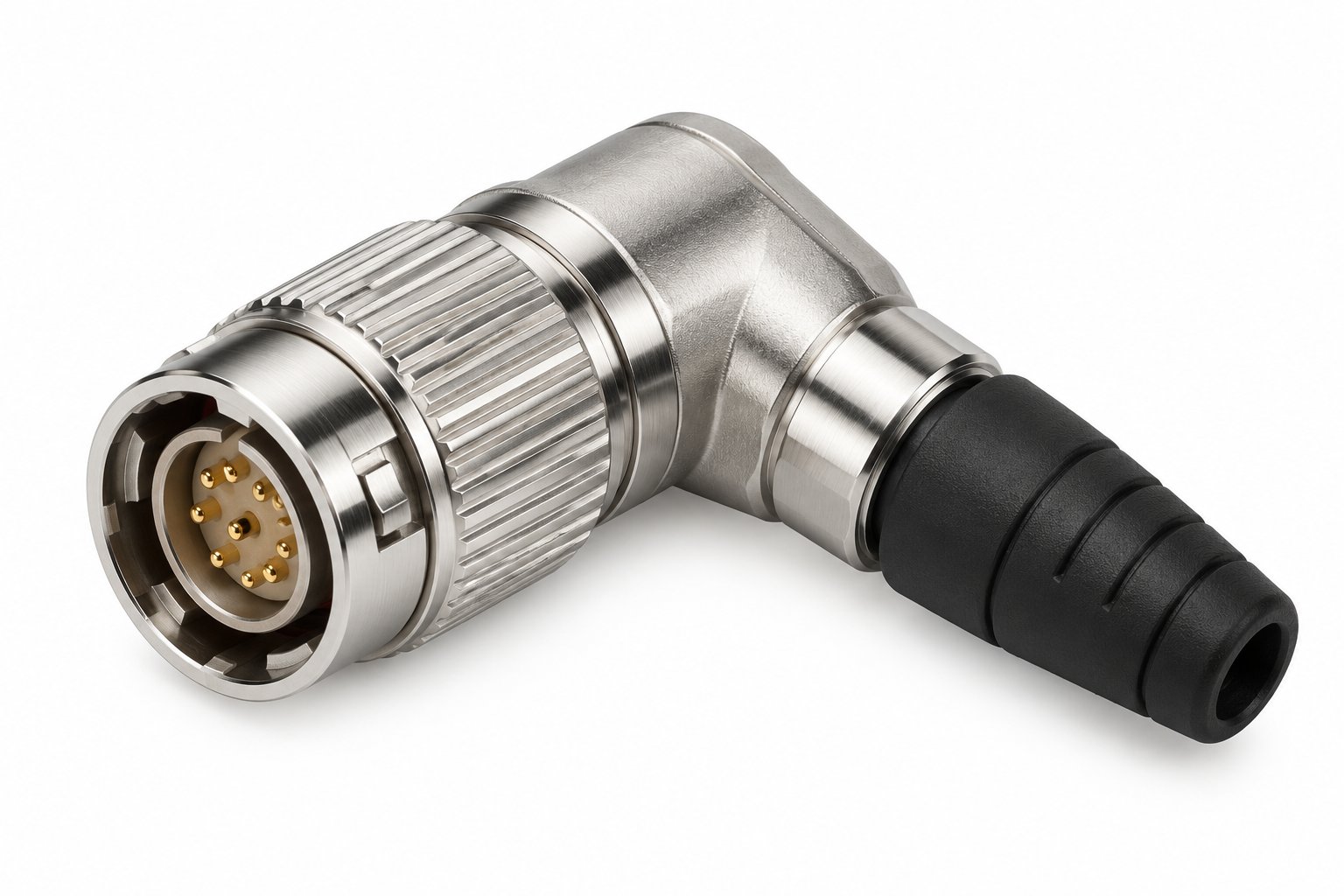
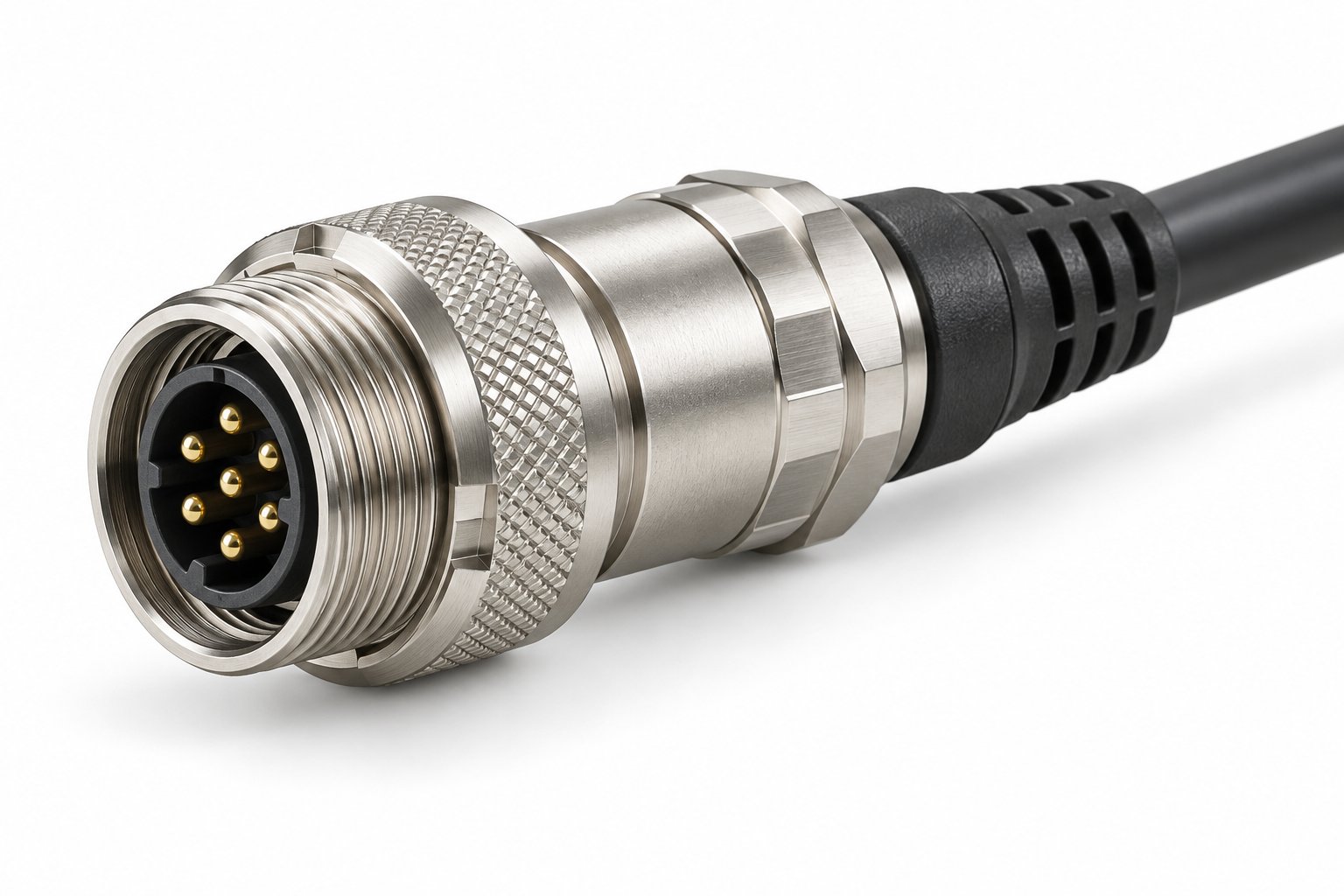
The K Series TGG straight plug is the rigid waterproof plug of the family: a threaded or push-pull interface with IP66–IP68 sealing and strong EMC performance, built for equipment that faces rain, dust and electromagnetic noise at the same time.
Specification overview
| Pins | 2–30 |
|---|---|
| Protection | IP66 – IP68 |
| Mating cycles | > 5,000 |
| Working temperature | -55 °C to +250 °C |
| Shielding | > 95 dB at 10 MHz, > 80 dB at 1 GHz |
| Shell sizes | 0K / 1K / 2K / 3K / 4K |
| Terminations | Solder / crimp / PCB |
EMC performance for noisy installations
The shielding figures are above 95 dB at 10 MHz and above 80 dB at 1 GHz. This is why the K Series appears around servo drives, inverters and other equipment where power electronics sit next to signal lines: compare these numbers with the interference level around your installation, and state any tighter requirement in the inquiry.
Terminations and mating life
Three termination styles cover the usual production routes: solder for classic harness work, crimp for solder-free harness production, and PCB for direct board connection. The plug is specified for more than 5,000 mating cycles and works from -55 °C to +250 °C, so it tolerates both outdoor cold and high ambient heat.
Threaded or push-pull locking
Both interface styles exist in the family. Push-pull keeps mating to a one-hand action; the threaded version suits builds where the connector is mated rarely and stays closed for long periods. State the locking type you want with the order.
Where it is used
Typical applications are outdoor machinery, drives and control systems exposed to water splash, dust and strong interference.
The equipment-side counterpart is the K Series DHG waterproof floating socket, which adds alignment tolerance while keeping the same sealing level.
Questions buyers ask before ordering
Which sealing class should I specify?
The series spans IP66 to IP68. IP66 covers strong water jets and rain; IP68 covers immersion. Confirm the class that matches your site conditions with us before ordering.
Crimp or solder termination?
That follows your production method: crimp suits volume harness assembly without soldering, solder suits conventional harness work, and PCB suits board-mounted builds. All three are available.
What should an inquiry include?
The pin count (2–30), the sealing class required on site, the cable diameter, the termination style, and your target quantity.
Request this connector
Include the pin count, sealing class required on site and cable diameter so we can confirm the K Series code.